This essay is the first in my five-part series, Five Windows into a Fragile Economy. Each part examines how systemic fragility shows up in daily life — and why inclusion is not charity, but infrastructure.
Introduction
I write from lived experience as someone who has held a Section 8 voucher, fixed my own alternator with a neighbor just to get to work, and also served in senior leadership roles overseeing organizational infrastructure while serving on boards in my community. What looks like stability on paper often collapses in practice.
Housing is the first window because it reveals the most about the rest.
A roof and a route are not luxuries — they are infrastructure.
And when access breaks down, everything else becomes fragile: family health, workforce participation, small business growth, even community safety.

Growth Without Access Isn’t Growth
In 2005, I was living in North Bend without a car. Every trip to work or services meant an hour or more on the bus. That experience taught me early that affordability without access isn’t stability — a roof over your head doesn’t mean much if you can’t actually reach the things that sustain you.
The following year, my son was born at just 24 weeks, fighting for his life with a fragile immune system. In those early years, public transit wasn’t a safe option. I often relied on Hopelink rides for medical appointments because long commutes and crowded buses posed too great a risk. For families like mine, “access” isn’t abstract. It’s the difference between care and crisis.
So when I received a housing voucher in 2008, I chose a unit in Seattle’s Central District not just because it was affordable, but because it aligned with life: a grocery store within walking distance, a bus line that connected me to services, and for a time, both my son’s school and my job close enough to walk. What I didn’t understand then was how the voucher’s restrictions would bind me to Seattle. Accepting a “city” voucher meant I had to leave the neighborhood near my mother and move even further from my son’s father. That lack of flexibility shaped my support network and made location even more critical to our survival.
By 2016, while working at the YMCA in my neighborhood, the same lesson showed up again. I had to complete lifeguard training at a YMCA in Sammamish, miles away. My VW Jetta (bought with residual financial aid years earlier) had broken down, and the bus only ran during rush hour. That meant showing up hours early and leaving on transit’s terms, not mine. With my first paycheck, I bought an alternator off eBay, watched a YouTube video, and fixed it with a neighbor’s help. That moment reinforced what housing had already taught me: in our region, mobility isn’t optional. It decides whether you get to work, train, or survive.

That memory sits differently now. Today, as a board member helping to advance a similar community facility project in Bellevue— one that will shape how future families access aquatics, recreation, and public space — I carry that moment with me. Back then, I was just trying to get to training without a car. Now, I understand how decisions about transit, zoning, and public access aren’t accidental. They’re values, mapped onto geography. And who those values center determines who gets to participate.
Direct service staff at a sheltering organization where I serve on the board describe the same dynamic every day. Many families can’t choose alignment because affordable units are often clustered far from Bellevue jobs and services. Case managers even start housing searches by bus lines. One staff member described their commute as “a second job” that takes hours away from family, self-care, and potential second income.
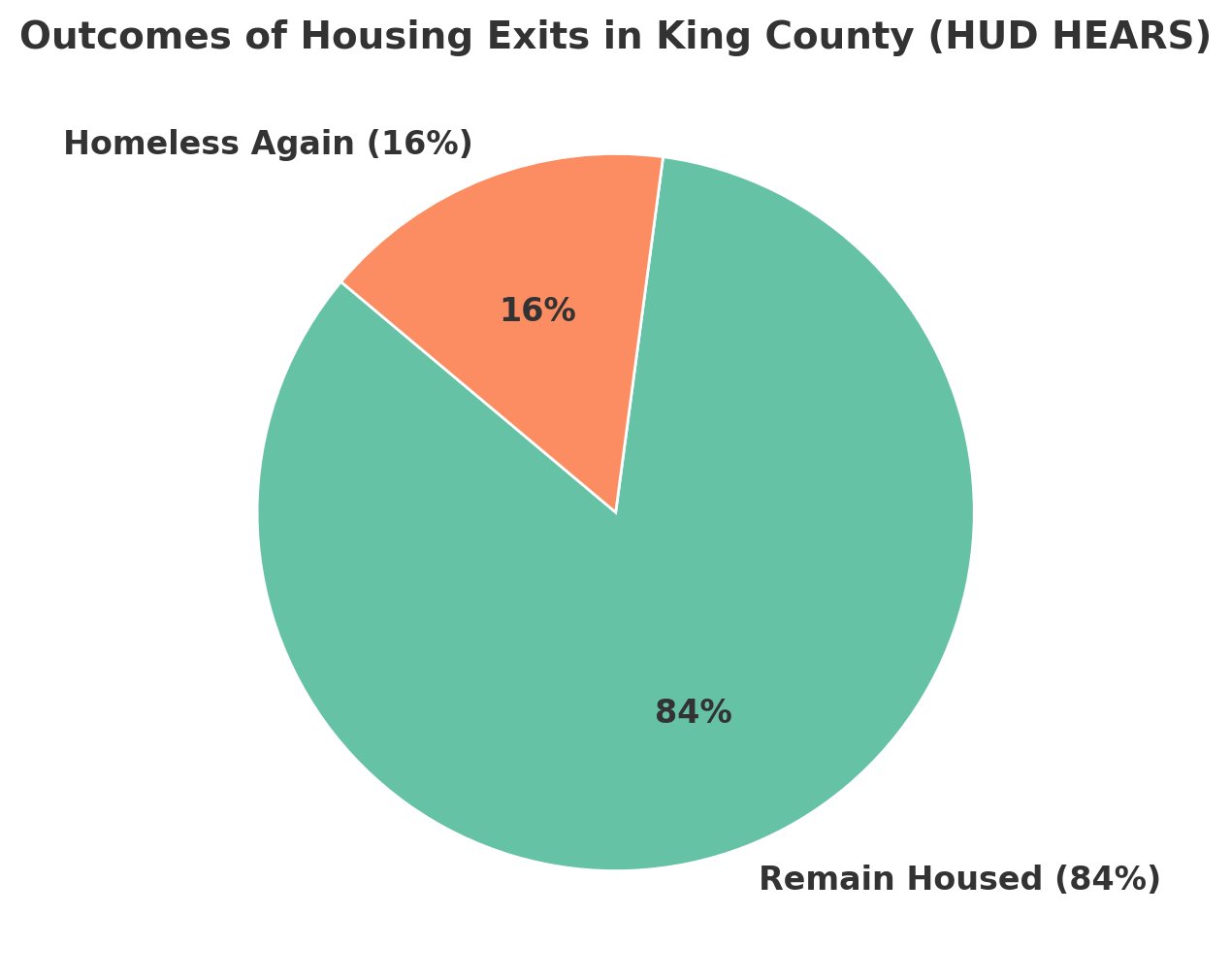
And the data proves how fragile the balance is. In King County, of more than 16,000 people who exited federally subsidized housing, 16% became homeless again within a year. For those with evictions or lease violations, it was one in four. National studies by HUD mirror the same. What no system tracks is what happens after that first year — the fragile threshold where housing, transit, and income together decide who stays stable and who falls back.
.
Policy Proximity vs. Lived Reality
On paper, our region has councils, task forces, and committees dedicated to housing and livability. Policymakers talk about “proximity” as if geography alone delivers stability. But too many have never lost hours to broken bus routes, sat through months of poor maintenance in a unit deemed “affordable,” or watched rent swallow 40 to 50 percent of their income; even in years when their job title suggested stability.
And too often, access to support isn’t transparent. Smaller community-based organizations are given discretion in how they distribute limited dollars, but without clear guardrails, that discretion can cut both ways. I’ve seen situations where someone who has been waiting for months is passed over, while another individual receives rapid assistance because of personal connections or word-of-mouth networks. It isn’t always intentional, but when systems depend more on “who you know” than what you need, equity gets lost.
Meanwhile, families and entrepreneurs remain in constant crisis management. I know, because I’ve lived both sides. As recently as 2022, I was on Section 8 housing assistance. Within ten years, I had earned a degree, stepped into senior leadership, and built my own consulting business. That trajectory looks like success. But when my first executive role began, Section 8 ended too.
And beyond housing, I carry another layer. As a Black woman, I have felt the pain of navigating employment that is never as stable or secure as the policies suggest it should be. I’m not alone. In mid-2025, the unemployment rate for Black women rose to about 6.7%, compared with roughly 4.2% nationally. That means Black women are unemployed at a rate nearly three points higher than the average — an epidemic that reveals how race, gender, and economics intersect to keep stability fragile.
The same inequities show up in housing. Black women are more likely to face discrimination in rental markets, less likely to have applications accepted even with vouchers, and more likely to carry the compounded cost of caregiving while navigating instability. Stability is never race-neutral or gender-neutral — it is shaped by who systems are designed to serve, and who they are not.
So today, while I rebuild, I do so without the cover of housing support for the first time since 2008, and while carrying the weight of a job market that has never been neutral. That isn’t just my story. It’s a mirror of the system’s flaws.
Housing Insecurity Is Economic Insecurity
Housing instability doesn’t stop at the doorstep; it ripples through the economy. When housing is unaffordable, small business vitality collapses. In some corridors, it is literally cheaper to lease a storefront than an apartment. That inversion forces impossible choices: shelter or growth, stability or opportunity.
And the workforce suffers too. Employees priced out of living near their jobs leave or spend hours commuting — time stolen from family, education, or the chance to earn additional income. Entrepreneurs with ideas but no capital remain locked out. Communities trying to build intergenerational wealth watch their progress stall.
I know, because I’ve lived it. After more than a decade in Seattle’s Central District under Seattle Housing Authority, I was forced to move in 2020, during the height of the COVID pandemic. Two emergencies collided at once. First, my apartment developed a major plumbing leak, and water damage spread until the unit was deemed unlivable. COVID protocols delayed the process, making a bad situation impossible. At the same time, my son went through a severe bullying incident in Seattle Public Schools. The disruptions in his school environment compounded the urgency of leaving, pushing me to find a safer school and a home closer to it. What might have been resolved in another year became unmanageable when both crises hit at once. I transitioned immediately onto a King County Housing Authority voucher and relocated to Bellevue. On paper, that might look like continuity. In reality, it was displacement forced by conditions no family should have to endure.
For readers who may not know: Section 8 is a federal program, but it’s administered by local housing authorities. In Seattle, that means the Seattle Housing Authority. In the rest of the region, it’s King County Housing Authority. After one year, voucher holders are technically allowed to “port out” — meaning transfer their voucher to another jurisdiction, even across the country. In theory, it’s designed to give families flexibility. In practice, porting often comes with months of paperwork, waitlists, and limited housing options.
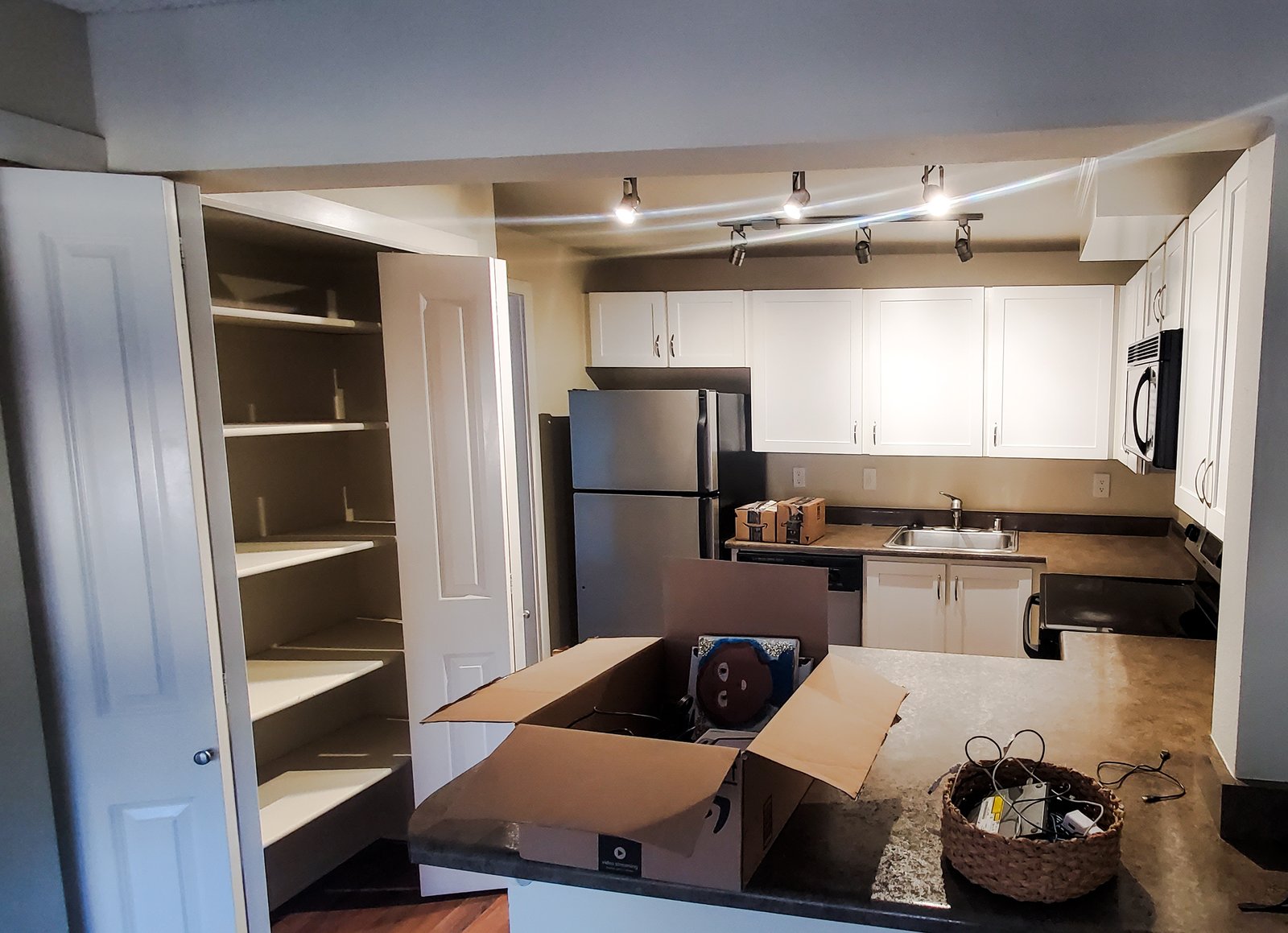
The following year, in 2022, my King County voucher ended because my income rose above the limit. That was the “positive exit” the system is designed to celebrate. But that year my income was nearly 26% lower than the median household income in Bellevue, which was around $150,000. In one of the most expensive regions in the country, that gap is the difference between stability and precarity. Both exits were systemic, not simply personal. They reveal how fragile the categories really are: “neutral” and “positive” on paper can mask displacement and instability in practice.
When “Emergency” Isn’t Enough
Emergency housing vouchers are often treated as quick fixes. They create the impression of immediate relief, and for a short time, they do. But when the vouchers expire, families are often left facing the same instability they thought they had escaped.
Emergency housing vouchers aren’t the same as Section 8 vouchers. Section 8 provides longer-term rental assistance, designed to help families maintain stability while contributing a portion of their income toward rent. Emergency vouchers, by contrast, are temporary and tied to crisis conditions. They provide a roof in the short term, but they expire quickly, leaving families with no guarantee of continued support.
At a recent retreat with the Board and Executive Directors of a sheltering organization, one theme was clear: when emergency vouchers run out, the people don’t disappear, but the resources do. Nonprofits are often left scrambling to cover costs or find alternative solutions.
Just this week, a council member asked me directly: “Is the emergency voucher issue still happening?” The question itself shows how unresolved the problem remains. At the retreat, leaders were wrestling with the same challenge — what happens when a voucher ends, and how organizations are left serving families without the resources to back them. These aren’t abstract debates. They are live questions communities across our region are facing right now.
For the individual community member, the impact is crushing. Each day becomes uncertain: will I still have housing tomorrow, or will I be unhoused again? That is not stability. It is a countdown clock disguised as support.
I’ve also seen the operations side of this, having overseen housing systems and direct service programs. Even when organizations understood the risks at the outset, it didn’t change the fact that clients still needed housing and placements rarely aligned with the timelines written into policy. The result was a volatile cycle: either redirect restricted funds (and risk compliance issues) or leave families stranded without support.
Emergency vouchers, in other words, are not solutions. Without continuity, they simply shift instability downstream onto families, and onto the very organizations already closest to the crisis.
Cash-Flow Policy Is Housing Policy
The same fragility I’ve experienced with housing shows up in how resources flow — or don’t — through our funding systems. For families, a late paycheck or a rent hike can trigger displacement. For entrepreneurs and nonprofit founders, it’s cash-flow policy that creates the same cliff.
I’ve sat on both sides. As an operations leader, I was responsible for establishing systems that included direct service disbursement policies and procedures, as well as improving case management so individual service plans aligned with data and intake needs. I know what it takes to move money, track compliance, and keep services transparent. I’ve also seen how community-based organizations struggle when they don’t have those systems in place. Families wait, staff burn out, and landlords lose patience — not because the funding doesn’t exist, but because the process breaks down.
I’ve also seen the other extreme. When government moves too quickly to push funds into the community — often in response to crisis — the lack of readiness assessments creates compliance nightmares. Dollars land where systems aren’t strong enough to manage them, and organizations already closest to community are set up to fail under the weight of audits and clawbacks. Sometimes, nonprofits are reimbursed for housing or rental assistance and think the crisis has passed — only to face an audit a year or more later that forces them to pay funds back because of a technical compliance gap. That unpredictability destabilizes organizations just as much as late funding does.
Speed without structure doesn’t equal equity; it produces instability at a different scale. That’s why assessing readiness and staff capacity can’t be treated as red tape. It has to be part of how we define equity. Because whether it’s a tenant waiting on rent assistance or an organization waiting on reimbursement, the pattern is the same — resources arrive too late, or land in systems that aren’t equipped to handle them. And those closest to the ground carry the cost.
Eight Shifts for Stability: A Dashboard for Action
What We Know Works (Proven in Developing Regions & Beyond):
Continuity Vouchers: Bridge supports keep families from slipping back into homelessness when income changes or assistance ends.
What We Can Do Now (Low-Hanging Solutions to Test or Scale):
Pre-Award Capacity Checks: Assess readiness before disbursing funds, pair with technical support, and prevent compliance blowback.
Supportive Housing + Workforce Continuum: Stability looks different across households. Some residents can benefit from workforce pipelines tied to housing and transit, while others — including those on disability, fixed incomes, or living with mental health challenges — need supportive housing that isn’t built on assumptions of employability.
Transportation-Linked Community Design: Any community-facing facility — from recreation centers to shelters and workforce hubs — should be required to include a transportation access plan. Transit policy must be treated as part of community development, not an afterthought. If people can’t reach the services built for them, the investment fails before it starts.
Intermediary Partnerships: Use larger, more resourced organizations as intermediaries to support smaller community-based groups. Intermediaries can shoulder data management, compliance, and technical assistance, allowing smaller nonprofits to focus on direct service without being buried under administrative burdens.
Equitable Organizational Systems: Ensure smaller community-based organizations have transparent intake processes and guardrails against conflicts of interest, so housing resources don’t depend on “who you know” but on actual need.
What We Must Imagine (Dreams on a Road Less Traveled):
Exit Research & Accountability: Fund long-term tracking of all exits — positive, neutral, and negative — to learn what really sustains stability.
Post-Service Metrics: Require data at 12, 24, and 36 months to measure true impact, not just program completion.
There are glimpses of what works. During the pandemic, we saw rental assistance programs that moved dollars quickly when nonprofits had the right intake systems in place. Families were able to avoid eviction, not because the problem disappeared, but because cash moved at the speed of crisis. Those lessons should not be treated as one-time experiments. They should be the model.
Every shift points to the same truth: inclusion must be engineered into the system itself — in housing, in transit, and in how we measure success.
The Policy Gaps We Don’t Talk About
I don’t claim to be a policy expert. But I have lived through housing insecurity, managed voucher processes for others, and rebuilt infrastructure as an operations leader. From that vantage point, the gaps are clear.
In Washington State and King County, we don’t consistently track what happens after people exit housing support. We don’t always require community-based organizations to demonstrate readiness before managing large assistance programs. We don’t measure whether families remain stable after the check is cut. And too often, intake processes lack transparency, so support flows through word of mouth or personal connections instead of equitable systems.
These gaps matter because they show that funding alone isn’t enough. If public or private dollars are used for housing, then readiness, staff capacity, and conflict-of-interest policies must be part of the equation. Otherwise, families end up waiting, staff burn out, and stability slips away.
That’s why each of the Eight Shifts I outlined is really about the same thing: aligning resources with the layered realities of people’s lives. Because inclusion isn’t charity. It’s infrastructure.
Closing
I’ve spent years watching the cracks widen — not just in my own life, but in the lives of neighbors, coworkers, and families across King County.
This first window — housing — shows us how fragility stacks. A voucher ends, a bus doesn’t run, a paycheck comes late, a lease goes unrenewed. None of those failures happen in isolation. Together, they form the cliff so many of us stand on, day after day.
And too often, those who have lived that cliff are the least often heard in the rooms where policy is made. That won’t change unless more of us connect the dots — between the instability we see and the leaders we choose.
Growth without access isn’t growth. It’s displacement.
And it’s on all of us, as voters and community members, to demand better. When you evaluate candidates this year, don’t just ask where they stand on housing in theory. Ask: Do you track stability past the first year? How will you fund continuity when vouchers expire? Because these questions decide whether our systems build stability or recycle instability.
Next, we’ll step into the second window: Community Safety. Because when housing and mobility are fragile, the impact doesn’t stop at the household door. It spills into schools, workplaces, and neighborhoods. Safety is not just about policing or crime — it is about whether people have the stability and access that keep families and communities whole.
Sources & Credibility
The statistics cited in this essay are drawn from publicly available, peer-reviewed, and governmental sources. For example, the HUD HEARS Study tracks trajectories of households exiting subsidized housing and informs exit-risk data. The U.S. Bureau of Labor Statistics / FRED series confirms the 6.7% unemployment rate for Black women in 2025. Local homelessness data, such as the King County PIT estimate of ~16,385 people, is published by the King County Regional Homelessness Authority and local media outlets. These figures help ground this essay in both lived experience and empirical evidence.
If this essay resonates with your experience or community, I invite you to subscribe and share. Each window builds on the last, and together they tell the story of how we can rebuild stability from the ground up.

All data referenced in this essay is sourced from publicly available government or peer-reviewed reports, including the HUD HEARS Study, U.S. Bureau of Labor Statistics, King County Regional Homelessness Authority, and U.S. Census Bureau American Community Survey. This essay reflects both verified public data and lived experience within those systems.
Katoya Palmer is a nonprofit management consultant and founder of ToyBox Consulting & Management, where she helps organizations strengthen their operations, governance, and capacity for impact. To learn more or book a discovery call, visit www.toyboxconsulting.net
Visit the TikTok Video companion series