This essay is part of Five Windows into a Fragile Economy—a series exploring how instability in housing, safety, nonprofits, technology, and economic growth isn’t random—it’s systemic. Each essay examines a different layer of infrastructure we depend on but rarely see.

The Opening
The smell of chlorine still takes me back to my first job. The echo of whistles, the sound of children splashing, and the humid warmth of the pool wrapped around me like a promise. It was the kind of warmth that came from helping—knowing that something as small as teaching a child to float could change how safe a family felt. That job gave me structure, leadership, and purpose—the first glimpse of what I thought would be a lifelong calling.
I spent the next two and a half decades moving through every layer of the nonprofit system: program staff, operations leader, consultant, and board member. I saw how mission and money pull on each other like opposing tides—each necessary, each capable of capsizing the other if balance is lost.
Today, I serve on multiple boards supporting housing, aquatics infrastructure, youth diversion, and economic development. I was also inducted into the inaugural alumni board of the nonprofit university where I earned my degree—a reminder that even education now mirrors the same funding constraints it once tried to solve. Across all these vantage points, one truth has remained constant: fragility in the nonprofit system isn’t a flaw—it’s a funding choice.
Smaller, newer organizations often rely on the charisma of a founder or the closeness of relationships to survive. Larger, legacy institutions rely on politics—the unspoken hierarchies that make reform slow and risk unwelcome. In both, power flows toward those closest to the center.
Governance, in theory, should stabilize that tension. But in practice, it often mirrors it. Some boards are learning on the fly, modernizing policy while steering forward. Others hold the wheel so loosely that accountability drifts out of reach.
And somewhere between those poles are the people—leaders, staff, and community members—trying to build something ethical inside systems that were never designed for sustainability.
It’s from that vantage point that I write—not as an outsider looking in, but as someone who’s lived every rung of the ladder. I’ve seen what happens when passion meets politics, when scarcity becomes strategy, and when good people are forced to choose between doing the work and surviving the system itself.
The Anatomy of Fragility
We expect nonprofit leaders to manage multimillion-dollar missions while underpaying them, underfunding their infrastructure, and then holding them solely responsible when systems break. Fragility doesn’t begin with bad leadership—it begins with budgets that ignore infrastructure.
Over half of nonprofits in the U.S. cite chronic underfunding of infrastructure as their greatest operational risk—not turnover or mission drift, according to the National Council of Nonprofits (2024). When oversight, HR, and finance are understaffed, ethical lapses stop being exceptions and start becoming survival strategies.
I’ve seen it up close: passion prioritized over process, duplication over coalition, and relationships valued more than results. Some organizations start with heart but not systems—no finance structure, HR compliance, or data integrity. Others grow faster than their capacity, chasing dollars that fund programs but never the departments that sustain them. The result is predictable: instability disguised as innovation, and charisma mistaken for competence.
The Warden — A Metaphor for Ethical Governance
I was called the warden once. At first, it stung. Later, I realized it said more about the culture than about me.
In a workplace allergic to structure, the one who enforces it becomes the villain. The warden isn’t a tyrant; she’s the person who loves the mission enough to protect it from collapse. She’s the regulator who believes accountability is a form of care. She builds systems so people can succeed without begging for exceptions.
Some argue that enforcing corporate-style governance on community organizations recreates the same colonial hierarchies nonprofits were built to resist. They say structure stifles the cultural trust that holds grassroots movements together. But what I’ve learned is that accountability isn’t colonial—it’s cultural care. Communities of color have always had their own systems of order and reciprocity. The danger isn’t structure; it’s when the wrong people control it.
But being the warden is lonely work. In fragile systems, courage often looks like control. And when culture confuses chaos with authenticity, structure becomes suspect.
Nearly 40% of nonprofit employees who witness ethical breaches or harmful behavior never report it—most out of fear of retaliation or the belief that it won’t matter, according to the Stanford Social Innovation Review (2023). But “misconduct” itself is often defined by power. In too many organizations, the people punished for breaking the rules are the ones enforcing them, while those causing harm to go unnamed. And when young, lived-experience, or frontline staff don’t know their rights—or can’t safely raise concerns—that silence becomes structural. It isolates the wardens, those who speak up, and rewards the normalization of dysfunction as culture.
Courage, in practice, means holding the line when the culture would rather blur it.
Weaponized Incompetence — When Leadership Becomes Performance
Another invisible thread in fragile nonprofits is weaponized incompetence—the strategic use of inexperience or disorganization to avoid responsibility while keeping control.
I’ve seen executives claim they “don’t understand the numbers” to sidestep accountability for budgets, or managers delay decisions until someone else takes the fall. Sometimes it isn’t intentional at first—it’s rewarded over time.
A 2023 Bridgespan survey found that more than 60% of nonprofit leaders lacked the operational training required for their roles, while only 19% of funders offered leadership development support. This gap between responsibility and readiness creates a culture where incompetence isn’t just tolerated—it’s incentivized.
Favoritism thrives here. Underqualified leaders are protected not despite their gaps, but because of them—less competence means less challenge to existing power. The cycle is self-reinforcing: fragile systems hire for loyalty, not literacy, and then reward the very weaknesses that make oversight impossible.
Weaponized incompetence is the quiet twin of selective accountability. One hides behind “I didn’t know”; the other behind “I can’t prove it.” Together, they create a culture where the rules only apply to the people trying to follow them.
The Board Blind Spot — Governance Without Grounding
Across every boardroom table I’ve sat at, I’ve learned that governance isn’t steering from above—it’s balancing the weight of trust below.
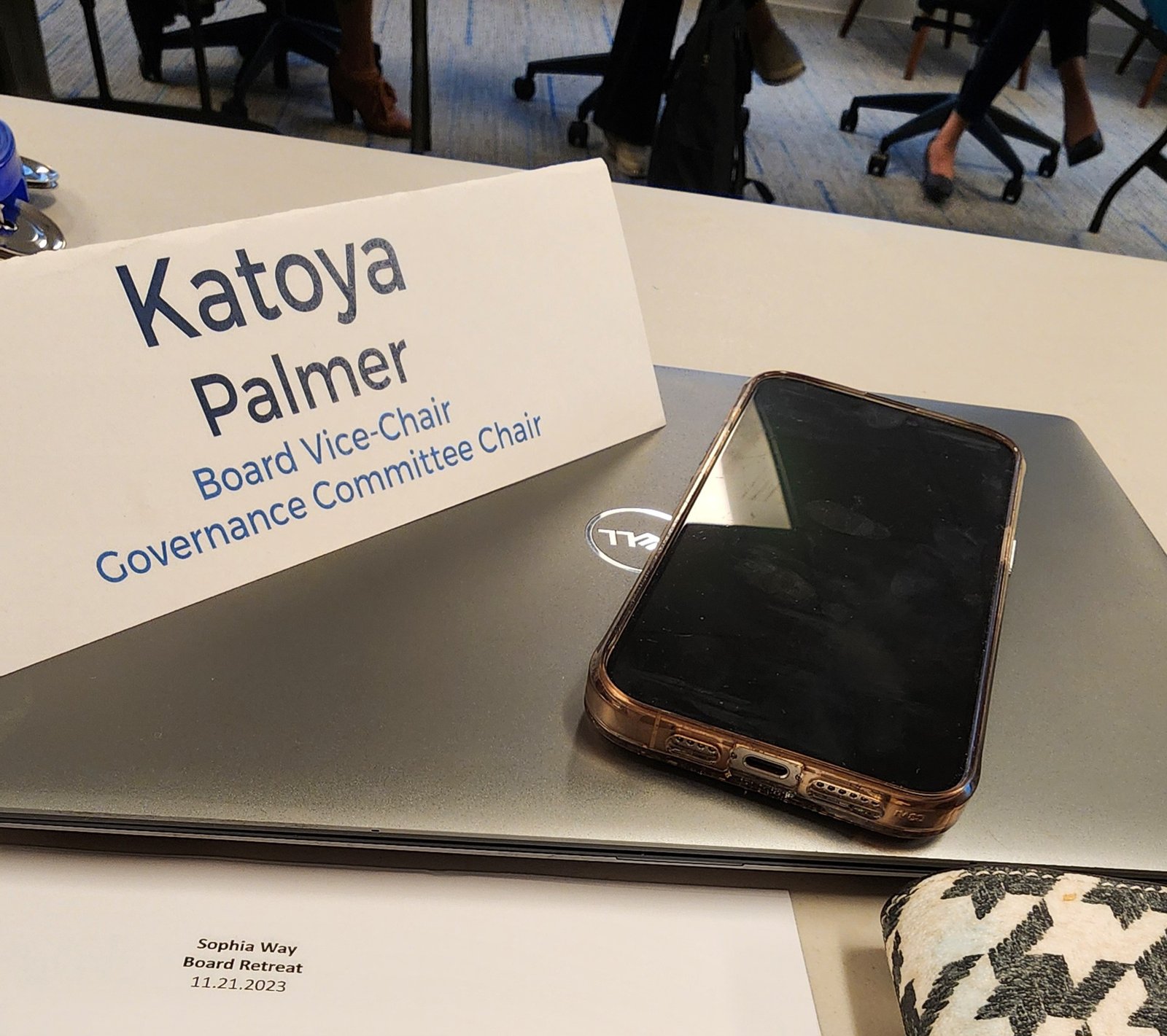
At the top of every nonprofit sits a board of directors—the body meant to safeguard mission, money, and accountability. Yet in too many organizations, boards are either underprepared, overextended, or quietly complicit.
Many leaders of color worry that naming dysfunction publicly feeds narratives that nonprofits—especially BIPOC-led ones—are unstable. I share that fear. But silence has never saved a system; it only prolongs fragility. Transparency isn’t betrayal—it’s repair.
BoardSource’s 2023 study found that only 38% of nonprofit board members fully understand their fiduciary responsibilities, and nearly one in four boards never evaluate their own performance. Boards that rubber-stamp budgets without understanding them create the perfect cover for misuse. Boards that prioritize loyalty over literacy allow weaponized incompetence to flourish. And boards that confuse “supporting the CEO” with “shielding the CEO” become complicit in the fragility they’re supposed to prevent.
Governance without grounding doesn’t just fail to protect staff and community—it erodes the integrity of the entire sector.
Boards are not decorations. They are the last line of defense.
We Are Not a Family — The Myth of Familial Leadership
One of the most dangerous sentences in nonprofit life begins with good intentions: “We’re a family.”
It sounds loving—until it becomes leverage.
The family story softens the reality of low pay and overwork. It asks staff to sacrifice boundaries for belonging. Inside that story, cronyism hides under “trust,” favoritism becomes “care,” and nepotism is excused as “keeping it in the family.”
A 2023 Nonprofit HR study found that 42% of nonprofit employees cite unclear boundaries or favoritism as their top reason for turnover—above pay or workload. Healthy organizations don’t need families; they need communities of practice.
Care looks like clarity, not codependence. Professional love shows up as fair pay, clear roles, and supervision that protects people instead of exploiting them. The family myth is one of the nonprofit industrial complex’s oldest survival stories—intimacy used to replace infrastructure.
Love without structure collapses under its own weight.
The Nonprofit Glass Wall
If there’s a glass ceiling in corporate America, there’s a glass wall in the nonprofit sector—the invisible barrier that keeps nonprofit professionals from crossing into for-profit roles or being seen as equally skilled.
The Nonprofit Times and Bridgespan reported in 2024 that up to 45% of nonprofit employees experience chronic overwork, and 30% plan to leave the sector within two years. Women of color remain the most underpaid and overextended group in the field.
When those employees try to transition out, they face skepticism from recruiters who see nonprofit experience as charity work, not strategy. Yet managing government contracts and grant compliance demands a rigor that rivals any private enterprise—the difference is that our revenue is called funding instead of sales.
The nonprofit glass wall keeps too many talented leaders boxed in—until they burn out completely or build their own enterprises to break through it.
The Operational Core — How Systems Sustain or Sabotage the Mission
Every nonprofit rests on three quiet systems that determine whether the mission will stand or collapse: HR, communications, and technology. They’re rarely the focus of strategy meetings, yet they’re the first to reveal when fragility sets in.
The HR Fault Line
Human resources is where culture meets compliance—and where underinvestment shows first. In fragile nonprofits, HR is often a shared folder, a few policies, and a person “doing their best.” That gap isn’t benign—it’s dangerous.
Without clear role definitions, equity checks, or performance standards, every decision becomes interpretive. Favoritism replaces fairness, burnout replaces belonging, and accountability becomes subjective.
The 2024 Nonprofit HR Trends Report found that 58% of nonprofits lack dedicated HR capacity, and nearly half report no formal grievance or performance management process. Poor HR investment doesn’t just erode morale—it blocks funding.
Federal and state contracts typically require written HR policies on nondiscrimination, workplace safety, whistleblower protection, and conflict resolution. Missing those policies can disqualify an organization from eligibility or result in clawbacks of previously awarded funds.
HR is not paperwork—it’s proof of readiness.
The Communication Gap
When internal communication is weak, misinformation spreads faster than memos. Staff operate in silos, boards make decisions based on partial truths, and funders receive polished impact narratives masking operational instability.
Stanford’s Center on Philanthropy reports that 70% of nonprofits admit to “strategic storytelling” that omits operational weaknesses to maintain funder confidence. It’s not deceit—it’s survival. But when messaging replaces meaning, transparency becomes performance art.
Digital Infrastructure and Compliance
Technology is the new backbone of trust. Yet TechSoup’s 2023 report found that three out of four nonprofits rely on outdated or unintegrated systems for HR, donor management, and compliance reporting.
For organizations receiving federal funds, compliance with frameworks like NIST SP 800-171 and 2 CFR Part 200 is nonnegotiable. Without secure systems, data breaches and audit failures are inevitable—and costly.
Digital equity isn’t just external; it’s internal. When only the largest nonprofits can afford integrated systems, smaller organizations are left managing million-dollar missions through spreadsheets and goodwill.
Technology is not a luxury—it’s governance.
Capacity Building and the Compliance Divide
Across my consulting work, I’ve witnessed a persistent divide: government and philanthropic funders often contract the same technical assistance providers to deliver templated “capacity-building” support. Those templates rarely fit the communities they’re meant to serve.
Some intermediaries insist the framework itself isn’t broken—that if funders simply paid more for their services, capacity building would work. But we’ve tried that. Money without customization just scales the same mismatched templates. Capacity isn’t built through volume; it’s built through context.
Smaller organizations—especially those led by women and people of color—need more than workshops and PDFs. They need intermediaries who understand both compliance and community, people who can translate bureaucracy into operational readiness.
Current grant and contract design often guarantees dysfunction by prioritizing audits and clawbacks over upfront assessment. Many government grants are structured to reimburse costs rather than pre-fund operations, forcing organizations to spend money they don’t have and hope reimbursement comes before payroll.
Overhead caps compound the problem. When funders limit administrative spending to 10% or less, they effectively penalize the systems that keep organizations compliant. This is how scarcity becomes systemic: we starve the very scaffolding that accountability requires.
True reform means reframing compliance not as a barrier but as infrastructure for sustainability—and ensuring that capacity building is contextual, not copy-pasted.
I’ve learned that sometimes, the most effective change doesn’t announce itself—it integrates. A Trojan Horse model: building equity and reform inside structures that were never meant to hold them. It’s how many nonprofits—especially those led by marginalized or reform-minded leaders—play both sides of the game. They operate in full compliance, but they repurpose those same frameworks to pilot new models of governance, pay equity, and data ethics from within. The goal isn’t to evade oversight; it’s to use the system’s own language to expand what’s possible.
The Quiet Currency of Conflict
Even in organizations built on public trust, proximity can become its own economy.
Conflicts of interest are supposed to be managed through disclosure—someone notes a relationship, steps back from a vote, and the minutes move on. But acknowledgment without accountability is paperwork, not prevention. Most nonprofits have conflict-of-interest policies that live in binders, not in practice. They name the risk without managing its reach.
Some decolonizing funders argue that traditional audits and compliance checks reflect white-dominant values—that they measure control instead of trust. There’s truth in that critique. But transparency doesn’t have to be colonial. It can be cultural when communities set the terms of what accountability looks like.
I’ve watched how these overlaps, left unchecked, shape entire ecosystems: boards awarding contracts to friends, partner agencies funding one another’s staff, consultants rotating between evaluator and grantee. Nobody sets out to exploit the system, but when oversight is weak and relationships are the main currency, lines blur fast. What starts as collaboration can slide quietly into collusion.
These patterns cross every demographic and political line. They appear in BIPOC-led start-ups trying to survive and in legacy institutions guarding influence. The difference is not morality—it’s capacity. Larger organizations can afford compliance officers. Smaller ones rely on trust and informal networks, leaving them more exposed when questions arise.
The same dynamics appear in corporate philanthropy, where affiliated entities profit from their own giving. We call it synergy in the private sector and community partnership in the nonprofit one, but the outcome is the same: power circulates within a closed loop.
Real reform would treat conflicts of interest as a living risk, not a line item. Annual reviews, transparent posting of related-party transactions, and training that asks who benefits from each decision would turn policy into protection. Until then, fragility will continue to hide in the gray space between collaboration and control.
Courage Over Culture
If culture eats strategy for breakfast, courage keeps us at the table.
The Trojan Horse — When Reform Masks Control
Not every system failure looks like corruption. Sometimes it looks like progress.
I’ve watched “innovation,” “equity,” and “partnership” become Trojan horses—language designed to open the gates for change while smuggling in the same power dynamics that broke the system to begin with. Funding streams labeled as capacity-building arrive empty of infrastructure. Equity initiatives are launched without accountability. Collaborative tables are set with the same voices already in charge.
The deception isn’t always intentional. Most people inside the horse believe in the mission—they just don’t see who’s holding the reins.
Real reform doesn’t need new buzzwords; it needs new scaffolding. It needs governance that can tell the difference between evolution and disguise.
Courage over culture means building infrastructure that tells the truth, even when it’s uncomfortable.
Critics of stricter governance argue that equity funding should move at the speed of need—that every added checkpoint delays justice. I understand that urgency; I’ve lived it. But when money moves faster than accountability, harm moves faster too. The goal isn’t delay—it’s durability.
In every sector, there are moments when the pursuit of equity becomes a shield for weak systems. When money moves faster than accountability, the mission bends toward proximity—who’s in the room, who signs the check, who holds the gate. I’ve seen it happen when programs meant to redistribute opportunity skip the rigor of conflict-of-interest checks or transparent award criteria. Equity funding without governance isn’t empowerment—it’s exposure. And for organizations building impact without upfront capital, those gaps can turn good intent into reputational risk. The goal isn’t to make grants safer for institutions; it’s to make them safer for the communities they’re supposed to serve.
Courage separates care from control, leadership from loyalty, and governance from ego. It is the daily practice of telling the truth, even when it costs proximity or power.
Courageous organizations tell the truth about capacity, reward systems over saviors, diversify power, and move at the speed of trust. Because the health of a nonprofit isn’t in its logo or its leader—it’s in whether the people doing the work have a structure sturdy enough to stand on.
Rebuilding After the Break
I once stepped into an organization that was unraveling from the inside out. Within my first 90 days, we discovered financial misconduct. Trust had eroded between staff, leadership, and the board. Every meeting felt like triage.
I learned that systems don’t just protect money—they protect people. By rebuilding our financial, HR, and technology infrastructure, we rebuilt confidence. Staff who once resisted structure began to see that accountability wasn’t punishment—it was protection. Even years later, some reach out to say they now understand what I was trying to build.
That experience reminded me that courage and care must share the same space. Systems are how we make that possible.
Systems Change Dashboard: Reimagining Nonprofit Infrastructure
Reform doesn’t begin by tearing down the nonprofit sector—it begins by rebuilding its scaffolding to support accountability, not just altruism.
Some founders see intermediaries as just another gatekeeper—another layer taking a cut between community and capital. That critique is fair when intermediaries hoard power instead of sharing it. The model works only when they translate, not control—when they exist to make access easier, not ownership harder.
1. What’s Working — Signs of Hope
These aren’t theories—they’re models already proving what’s possible.
Public accountability audits in cities like New York and Chicago now require public posting of nonprofit contracts and board affiliations tied to city funding.
Shared service centers and intermediary hubs in Washington State and Minnesota pool HR, finance, and compliance functions across nonprofits to increase efficiency.
Emerging “equity with accountability” grant frameworks tie diversity goals to transparent reporting, preventing equity funding from becoming a shield for weak systems.
Participatory grantmaking models give residents real decision-making power over funding allocations.
Independent ethics channels reduce retaliation and strengthen reporting cultures.
Capacity-based funding now appears in some state contracts, allocating 10–15% of grants specifically to infrastructure and compliance.
Transparency isn’t punishment—it’s protection.
2. Low-Hanging Fruit — Fixes Communities Can Adopt Now
Every community can start here.
Mandate fiduciary, equity, and conflict-of-interest training before board members vote on budgets or contracts.
Fully fund the cost of compliance by embedding administrative expenses directly into every grant and publishing administrative caps publicly for transparency.
Reward coalitions and intermediary organizations that provide shared services—finance, HR, and compliance—to smaller nonprofits.
Require that every publicly funded “equity” initiative include clear governance criteria and disclosure protocols.
Make audits and conflict disclosures public as a condition of partnership.
Standardize HR equity checks and whistleblower protections.
Policy isn’t paperwork—it’s prevention.
3. The Dream Work — Long-Term Reforms Worth Building Toward
The horizon worth aiming for.
A national Nonprofit Integrity Index rating governance, compliance, and equity benchmarks.
Open contracting portals listing every funded nonprofit and oversight report in real time.
Independent ethics commissions to investigate misconduct beyond political influence.
National funding streams for intermediaries that provide technical assistance, fiscal sponsorship, and compliance infrastructure for grassroots organizations.
National standards for digital compliance and data ethics in philanthropy, ensuring that technology supports—not replaces—accountability.
Community governance pipelines training residents to serve as board peers alongside corporate directors.
The goal isn’t to weaken nonprofits—it’s to strengthen the systems that keep them honest.
The Bridge Forward
Because when the scaffolds fail, the next collapse doesn’t just happen in our ledgers—it happens in our systems, digital and human alike. the next essay will discuss the fragility of IT.
References (Informal Sources)
These references reflect the research, lived perspectives, and sector analyses that shaped this essay. They include both supportive and opposing viewpoints—from funders, intermediaries, BIPOC leaders, and governance scholars who continue to challenge how our systems hold, or fail to hold, the public trust.
Sector Data & Reports
BoardSource. (2023). Leading with Intent: BoardSource’s National Index of Nonprofit Board Practices.
Bridgespan Group. (2023). The State of Nonprofit Leadership Development.
Center for Effective Philanthropy. (2023). Workplace Well-Being and Burnout in the Social Sector.
Gallup. (2023). Employee Burnout in Mission-Driven Work.
National Council of Nonprofits. (2024). Infrastructure and Sustainability Survey.
Nonprofit HR. (2023). Nonprofit Workforce Trends Report.
Stanford Social Innovation Review. (2023). Ethical Culture and Accountability in Nonprofits.
TechSoup. (2023). Digital Readiness in the Nonprofit Sector.
The Nonprofit Times. (2024). Workload, Turnover, and Equity in U.S. Nonprofits.
Counter-Perspectives & BIPOC Sector Voices
“The Hollow Prize for Leaders of Color.” Stanford Social Innovation Review. (2022).
– Highlights how leaders of color often inherit under-resourced or structurally fragile organizations.Nivetha Nagarajan. (2024). “I Am More Valuable Than You Are: A Perspective on Nonprofit Hierarchy Culture.” Community Centric Fundraising.
– Challenges hierarchy and calls for participatory, worker-centered governance.Nonprofit Quarterly. (2023). “Should We Cancel Capacity Building?”
– Argues that traditional capacity-building frameworks perpetuate inequity rather than repair it.Decolonizing Philanthropy Collective. (Various 2022–2024 essays).
– Critiques Western audit and evaluation systems as instruments of control and advocates culturally defined accountability.Community Centric Fundraising Network. (2021–2024 roundtables).
– Elevates tension between urgency and governance: whether rapid-response equity funding should outpace compliance.Liberatory Governance Scholars & Movement Builders.
– Offer frameworks for relational accountability that informed the “courage over culture” discourse.
Complementary Perspectives & Intermediary Models
Shared-service hubs in Washington State and Minnesota (regional case studies, 2023–24) documenting pooled HR and finance systems across small nonprofits.
Participatory grantmaking initiatives in Chicago & New York, demonstrating how resident governance increases transparency.
Discussions with community-based intermediaries who balance compliance translation with cultural context (2023–2024 field notes via ToyBox Consulting).
Conceptual & Metaphorical Inspiration
The Warden metaphor and the “fragility as funding choice” thesis derive from the author’s lived experience leading community-based organizations and governance reform projects (2015–2025).
Supporting language on “courage over culture” informed by cross-sector dialogues with equity-driven executives, board members, and policy peers across Washington State.
Acknowledgment
This work stands in conversation with the BIPOC reformers, funders, and system builders who continue to hold the line between accountability and access. Their contradictions—and their courage—make reform possible.
Katoya Palmer is a nonprofit management consultant and founder of ToyBox Consulting & Management, where she helps organizations strengthen their operations, governance, and capacity for impact. To learn more or book a discovery call, visit www.toyboxconsulting.net.